Sustainability in the Residence Halls

Reducing our carbon footprint in the Residence Halls
Housing & Residence Life has made sustainability a chief concern. All of our recent renovations incorporated efficient water consumption fixtures and motion sensor lighting/heating/AC controls. We’ve also equipped Housekeeping staff with Green Seal products and implemented a microfiber floor cleaning process.
Jefferson Suites and Spartan Village are certified LEED Silver and The Quad is LEED Gold. Leadership in Energy and Environmental Design (LEED) is a rating system for the design, construction, and operation of high-performance buildings and developments created by the U.S. Green Building Council (USGBC). LEED certified buildings on campus amount to 25% of UNCG’s total gross square footage. Learn more about our LEED certified buildings.
In addition to what we do behind the scenes, it is our hope to educate students about responsible behaviors and sustainable practices in the residence halls and on campus. Going green in a college residence hall does not mean drastically changing your lifestyle. Altering a few habits to follow sustainable practices not only ensures the residence hall grounds stay neat and inviting, but will lead to a healthier you and a healthier environment.
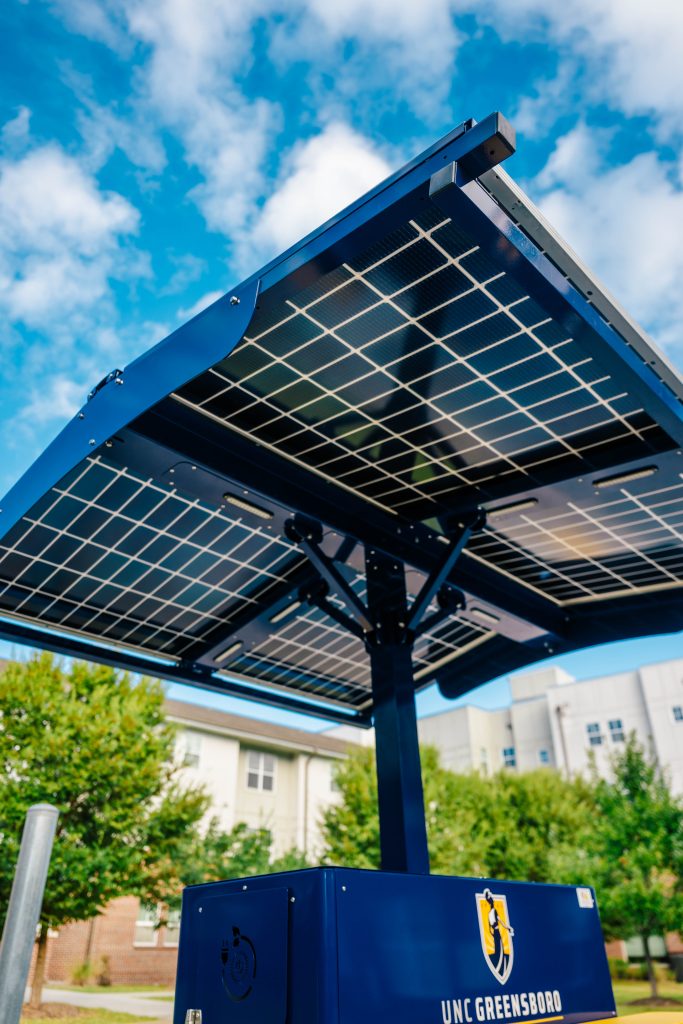
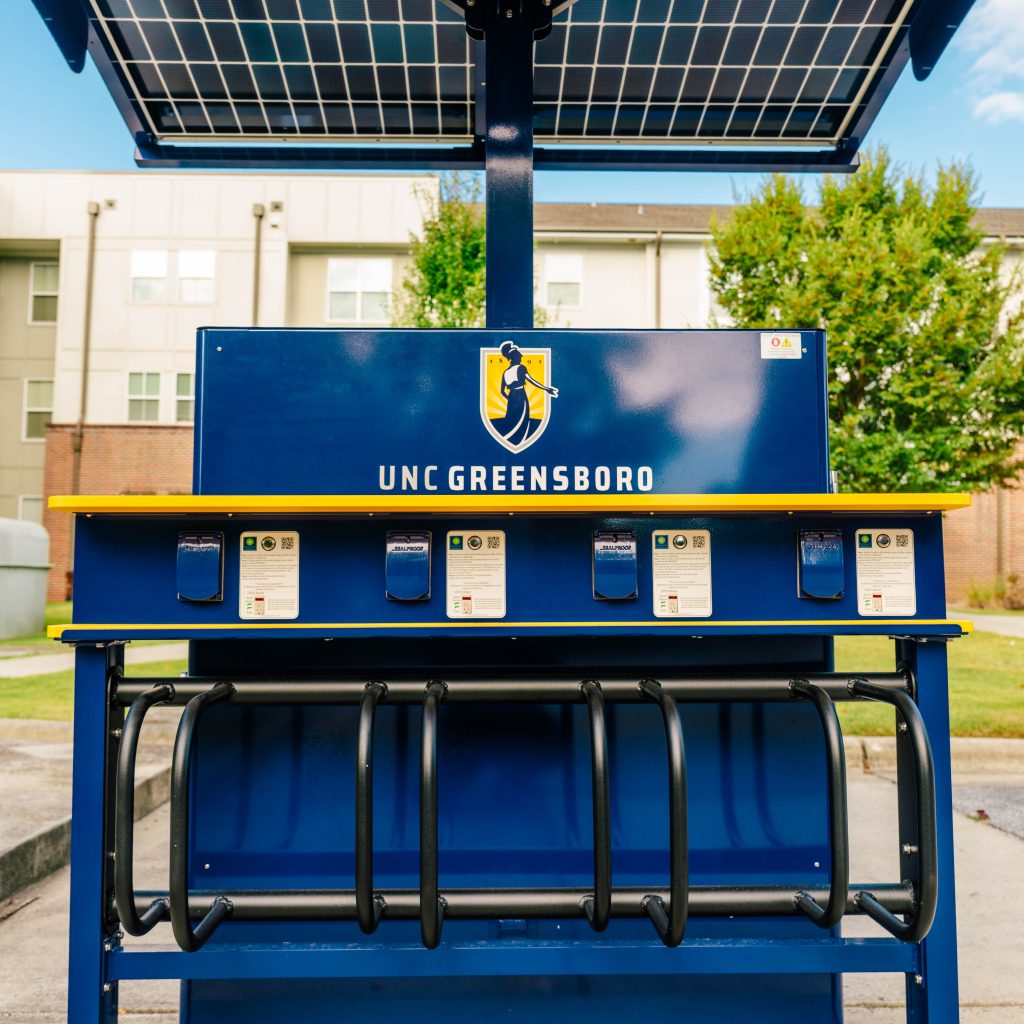
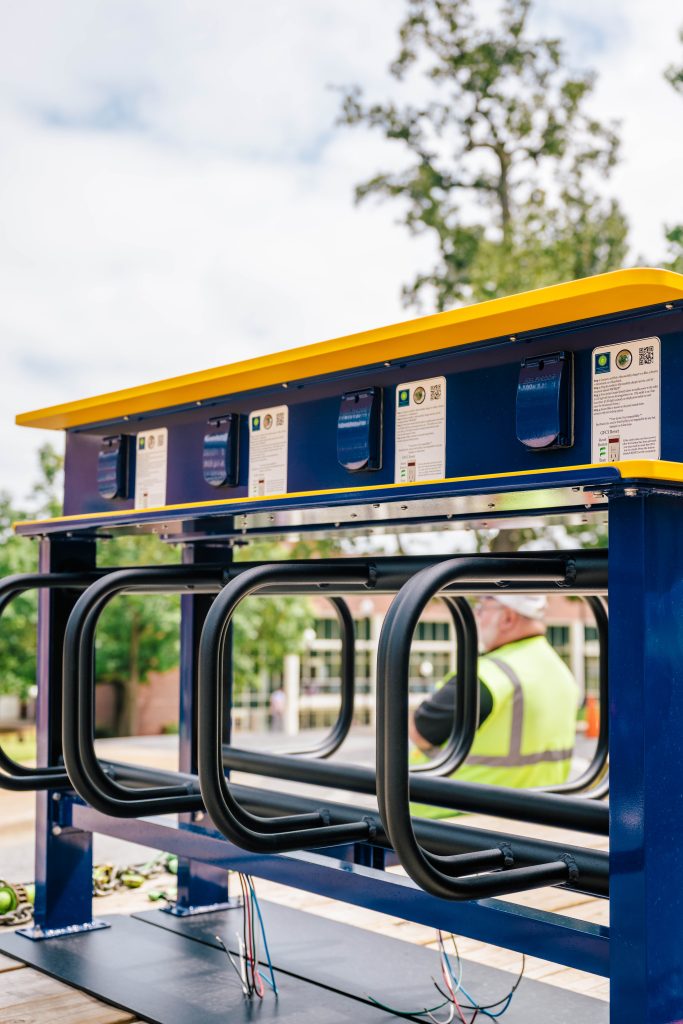
UNC Greensboro has installed solar-powered charging stations at two locations for students to recharge their micromobility devices. It’s a partnership between several University departments: UNCG Parking Operations and Campus Access Management, Campus Enterprises, Housing & Residential Life, and the UNCG Green Fund administered by the Office of Sustainability.
They can be found on Grey Drive near Coit Hall and in Spartan Village near the Lofts on Lee.
The outdoor charging stations, manufactured and installed by EnerFusion, are completely self-contained, powered only by sunlight, and exist entirely off the electrical grid. They will provide lockable storage for up to four e-bikes, e-scooters, e-skateboards, or e-hoverboards at a time, with ambient lighting activated after sunset. Users need to provide their own locks and charging cables. It should take approximately two hours to charge the average e-bike battery.
View more information about the charging stations
Take Action

Student Environmental Clubs
Student groups play a vital role in the promotion of sustainability on campus and in the community. From community gardening, fighting food waste, eating vegan, to adopting streams and streets, there’s plenty of opportunities to get involved and provide service to our campus and city communities.
Eco-centric clubs include: Audubon Birding Conservationists, Food Recovery Network, Garden Club, UNCGreen, and Geography Club.
Bicycling
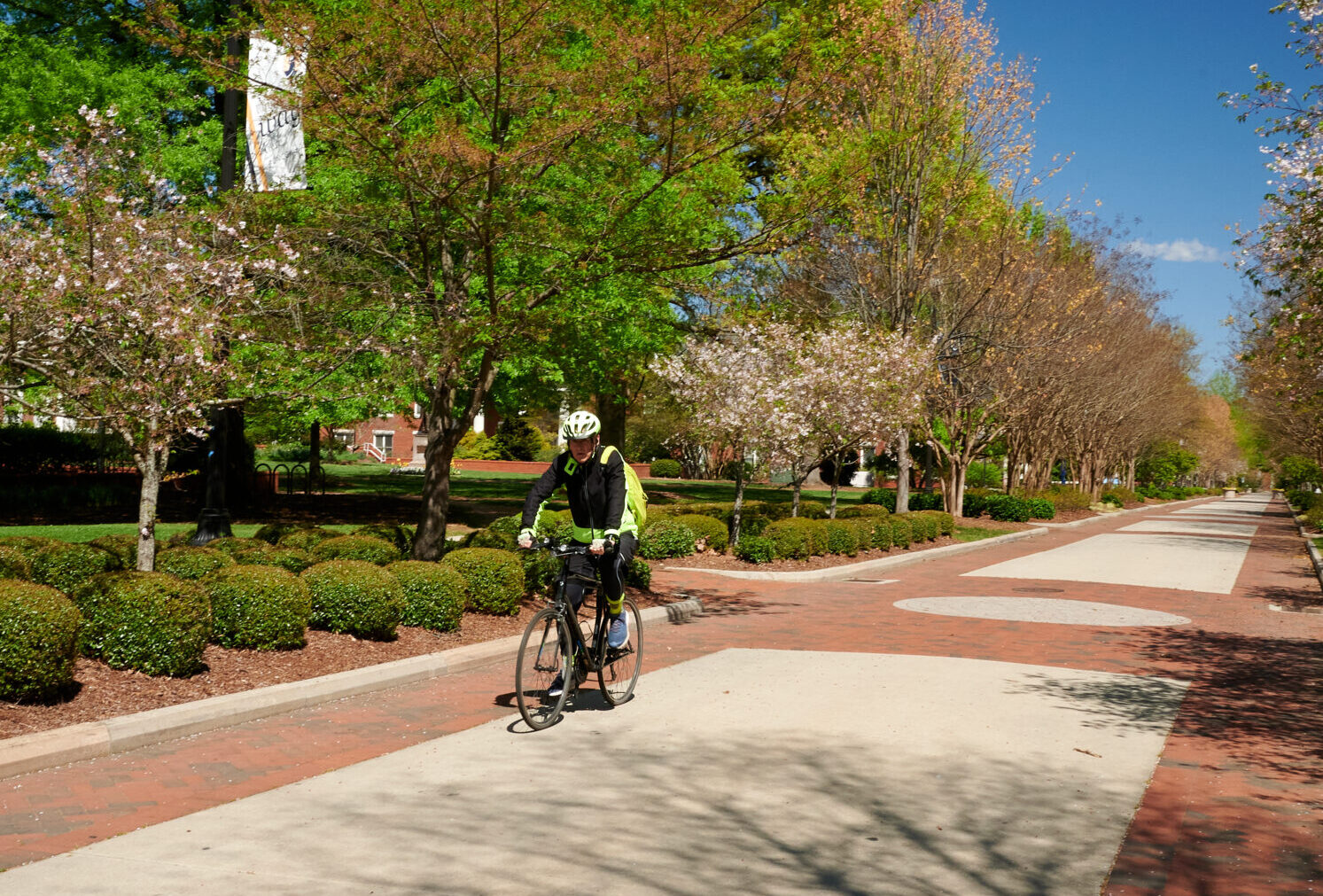
Students who use bicycles on campus as an easy means of getting around should be attentive to where they park or store them afterwards. Bikes are allowed to be stored in resident rooms, designated storage spaces and bicycle racks. Bikes left in undesignated locations will be confiscated by the University Police. All questions regarding confiscated bikes should be directed to the University Police at 336-334-5963. Additionally, in order to easily identify your bike in a crowd, University Police can engrave your bike. Find out everything you need to know about parking permits, parking areas, sustainable transportation, the Spartan Chariot, Park and Ride, and more below.